
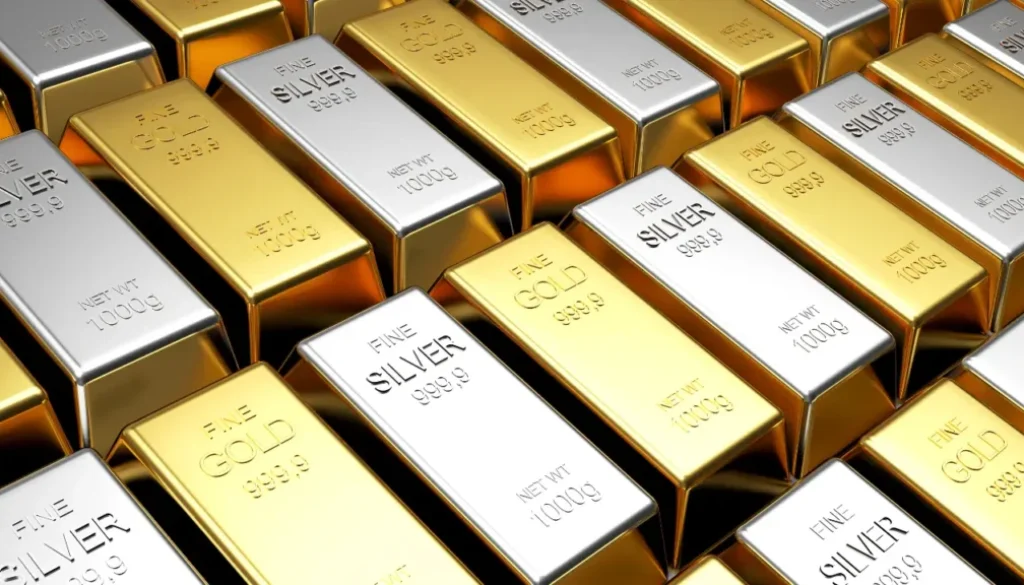
All that Glitters: Analyzing Precious Metals
I’ll be doing a brief analysis of gold and silver investments using sourced data.
Introduction
Gold and silver have been prized by people for thousands of years. One of the oldest forms of currency, they were associated with high value due to their rarity and lustrous appearance. Today, gold and silver have many industrial applications in the production of jewellery, coins and even electronics due to their high electrical conductivity and resistance to corrosion. Also, they are still used as a form of currency but not in the generic sense. Because of their scarcity and demand in industry, they are treated as commodities and can be bought in the physical forms such as coins, bars, bullion or assets such as stocks in mining companies and exchange-traded funds. Investors often buy silver and gold as a hedge against inflation as they appreciate over time. But this raises the question: Are these precious metals worth the hype?
Methodology
Data was sourced from Kaggle, an online platform with free datasets and used this as a basis for my analysis. I then used R coding to clean and manipulate this data to create visualizations and calculate the overall rate of return for both gold and silver separately. I then used this data to form a linear optimization problem with constraints to maximize an initial investment and calculate the amount of silver and gold needed to achieve it. Lastly, I used some financial mathematical techniques to determine how much gold and silver you need to buy per year to accumulate to a fixed amount a decade later.
Graphs


Techniques
You can view the techniques I used by clicking the relevant word below:
Analysis
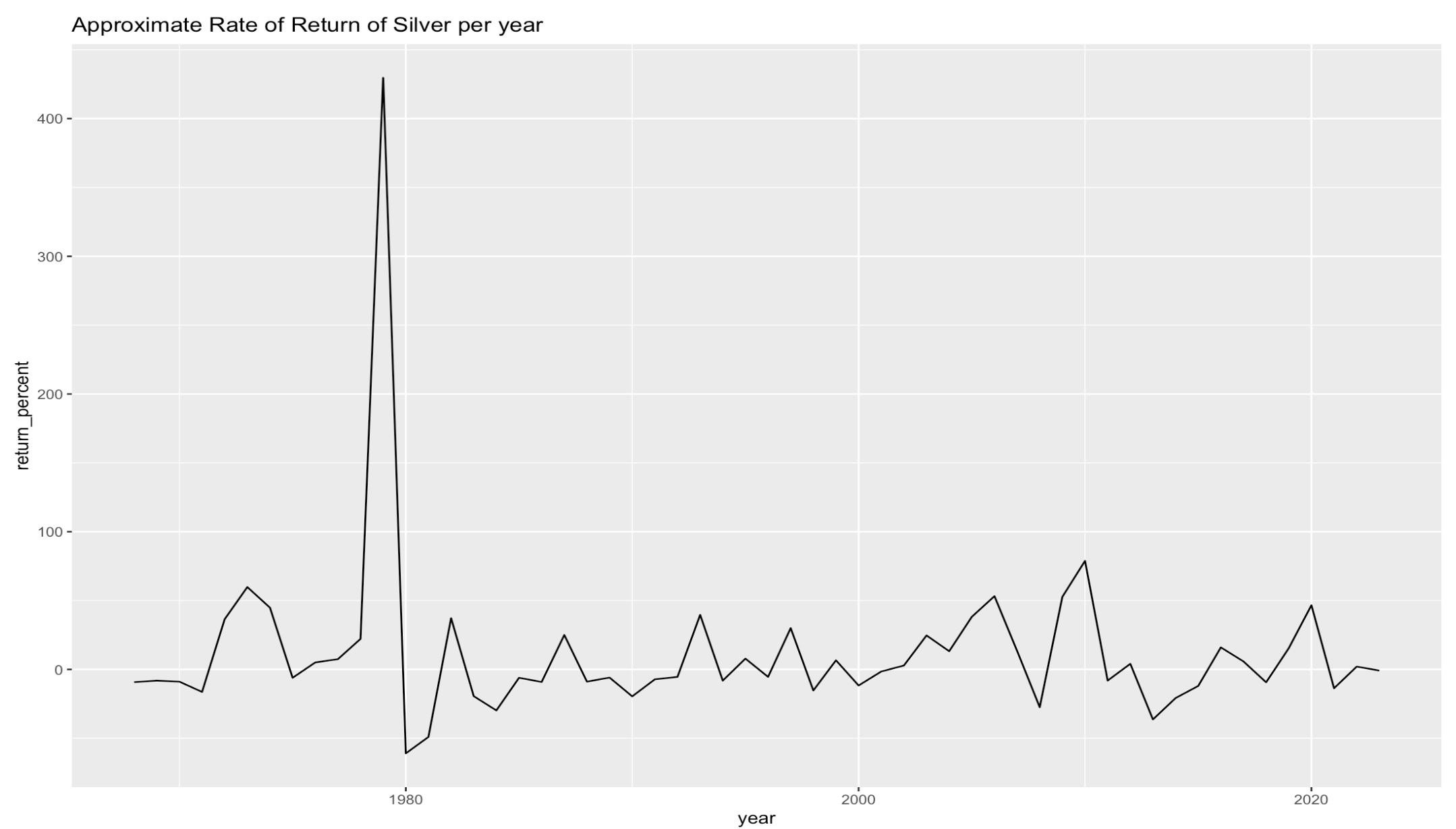
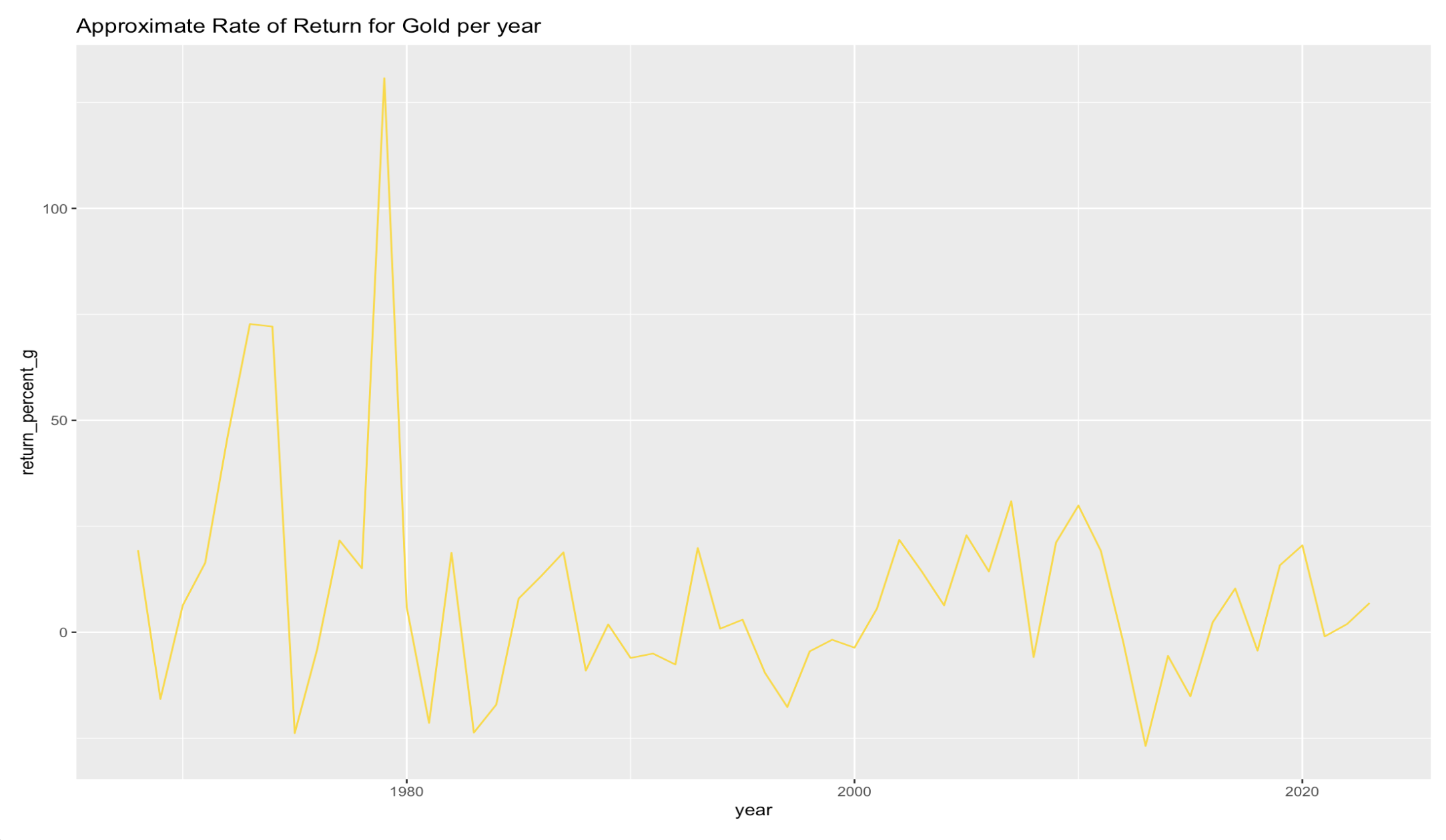
Based on the graphs of prices and return rates, we see that both gold and silver had an overall positive increase over the last few decades. There are noticeable spikes for the years 1980 and 2008, with both being attributed to extreme geopolitical and market events (for example, the collapse of the Bretton Woods system which affected the volatility of the U.S. dollar in the 1970s coupled with rampant inflation in the early 1980s and the more recent 2008 Financial Crisis). Nonetheless, the average return rate for silver was 3.96% and 6.57% for gold, which are quite impressive.
Observing the optimization problem, we see that $60000 should be invested in gold and $40000 should be invested in silver to reap the maximum return on investment, found to be approximately $5526 per year, which is not insignificant by any means (You can buy yourself a new wardrobe or take a nice vacation with that!)
Lastly, valuing some payment streams using silver and gold prices showed that you need to buy less gold than silver to get the same value, which makes sense given the higher return rate. But that consistently investing in both silver and gold would lead to hefty returns in the future.
Limitations
1. Quite a few assumptions were used for these models, so actual quantities will vary depending on future expected and unexpected global events.
2. My analysis heavily relied on the rates I found to be accurate, but more data would have painted a better picture.
Conclusion
Based on all the data and analysis above, gold and silver seem to be very good investments, both in the short and long term. Therefore any investor, whether new or veteran, should have these in their portfolio (This is NOT professional advice, so please weigh all risks appropriately if you are serious about investing).


Why I Chose Math and Statistics at University: A Personal Journey into the World of Numbers - AshDoesMath
April 19, 2025 @ 1:49 am
[…] my studies, I’ve learned how mathematical models can help explain everything from precious metals to predicting credit card usage. The thrill of applying mathematical and statistical theories to […]