

How Math Assignments Are Really Graded (From a TA’s Perspective)
University math grading can feel mysterious.
Many students assume grading is rigid, purely answer-focused, or even arbitrary. After grading hundreds of assignments across multiple first-year calculus sections, I can confidently say that this assumption is wrong.
Grading in mathematics is not just about correctness. Many students don’t fully understand how math assignments are graded at the university level. It’s about clarity, reasoning, structure, and interpretation.
As a Teaching Assistant at the University of Toronto, I’ve graded hundreds of assignments per term, primarily in first year calculus. This is a perfect opportunity to see high school thinking vs college thinking. Patterns emerge quickly. Certain mistakes appear repeatedly. Certain strengths stand out immediately. And the difference between an average solution and a great solution is often much smaller, and much simpler, than students think.
How Math Assignments Are Graded in University
Why Clear Structure Matters in Math Assignments
One of the biggest misconceptions about university math grading is that complexity earns marks.
It doesn’t. Clarity does.
When grading math assignments, I’m asking:
- Can I follow the student’s reasoning?
- Does each step logically follow from the previous one?
- Is the solution organized in a coherent way?
A well-structured solution doesn’t jump from step 1 to step 7 without explanation. Even in computational courses, graders need to see how you move from setup to execution.
You don’t need more steps.
You need clearer ones.
Why Correct Setup Often Matters More Than the Final Answer
In computational and interpretation-based courses, the setup is often where most of the marks live.
If a student:
- Identifies the correct formula
- Sets up the mathematical expression properly
- Applies the appropriate method
they usually receive substantial credit, even if a small arithmetic mistake happens later.
On the other hand, if the setup is incorrect but the final answer happens to be right, that’s usually coincidence. And coincidence does not earn marks.
The grading process rewards mathematical reasoning, not lucky outcomes.
Why Showing Your Work Matters in University Math
Another common misunderstanding about grading in mathematics is that writing less makes your solution look more “confident.”
In reality, graders need to see your reasoning.
If too many steps are skipped, we’re left wondering:
- Did you understand the rule you used?
- Was this a correct application?
- Is the conclusion justified?
Showing your work doesn’t mean writing paragraphs. It means making your logic visible.
Math is not just about being correct, it’s about being convincing.
Interpretation Questions Are Not Just Computation
In applied math courses, interpretation questions are often where students lose marks unnecessarily.
Students compute the number… and stop.
But interpretation questions are asking something different:
- What does this result mean?
- What does it tell us about the situation?
- What conclusion can we reasonably draw?
For example, if you compute a rate of change, you should explain what that rate represents in context.
Strong math assignments connect calculation back to meaning.
That connection is often what separates average work from excellent work.
Common Mistakes I See When Grading Math Assignments
After grading hundreds of papers, a few recurring patterns stand out:
- Writing only the final answer with no work shown
- Plugging numbers into formulas without explaining why that formula applies
- Ignoring what the question is actually asking
- Failing to interpret results in context
- Losing clarity through messy notation
None of these issues require more intelligence to fix.
They require more attention to communication.
Because at its core, a math assignment is structured communication of reasoning.
What Separates a great Math solution
The strongest assignments are rarely the longest.
They are:
- Cleanly structured
- Logically ordered
- Clear in notation
- Explicit in reasoning
- Concise but complete
The best students don’t necessarily write more, they communicate better.
There’s a quiet confidence in well-organized mathematics. Every step has purpose. Nothing is decorative.
Clarity reflects understanding.
How Grading Changed the Way I Approach Mathematics
Grading math assignments has changed how I write mathematics myself.
It has made me more attentive to:
- Structure
- Logical flow
- Clear setup
- Explicit interpretation
- Writing for an audience
Clear thinking produces clear writing. And clear writing often signals clear thinking.
Mathematics is not just about arriving at the right answer ; it’s about demonstrating how and why that answer makes sense.
That’s what graders are really looking for.
Frequently Asked Questions About Math Grading
Do math graders only care about the final answer?
No. Most grading schemes allocate significant marks to correct setup and reasoning. The final answer is important, but it is rarely the only thing that matters.
Do small arithmetic mistakes ruin your grade?
Not usually. If your setup and method are correct, you typically receive substantial partial credit.
How can I improve my math grades quickly?
Focus on structure, clear reasoning, and interpretation. Make your thinking visible. Don’t treat math like a guessing game; treat it like an argument.
Final Thoughts
If you’re trying to improve your math grades, shift your mindset.
Instead of asking:
“How do I get the right answer?”
Ask:
“Can someone else clearly follow my reasoning?”
That small shift often makes a measurable difference.
If you found this helpful, consider sharing it with someone taking a math course this term.
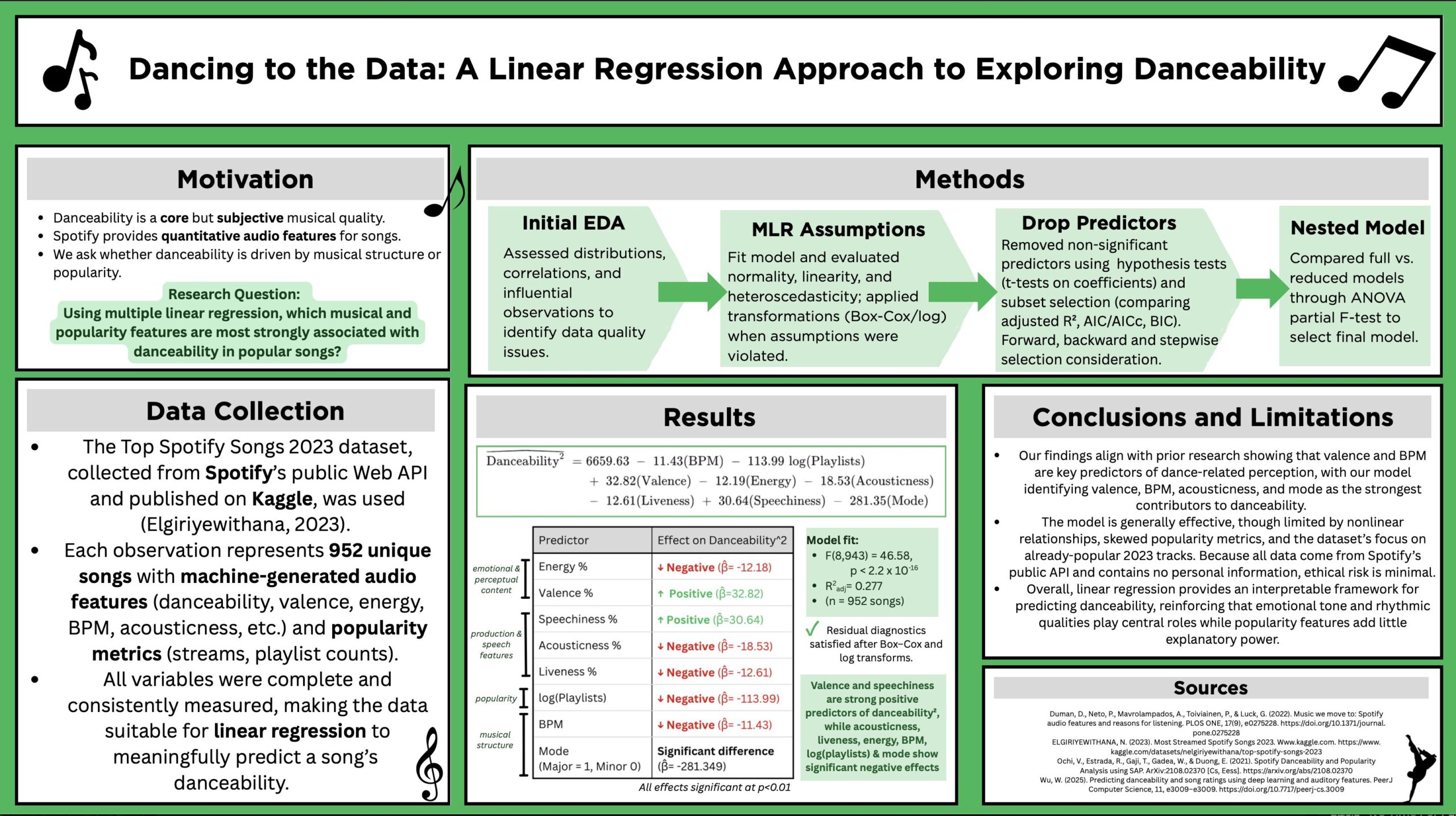
And if you’re interested in how structured thinking applies beyond the classroom, you might also enjoy my project analyzing Spotify data using regression on this site.